

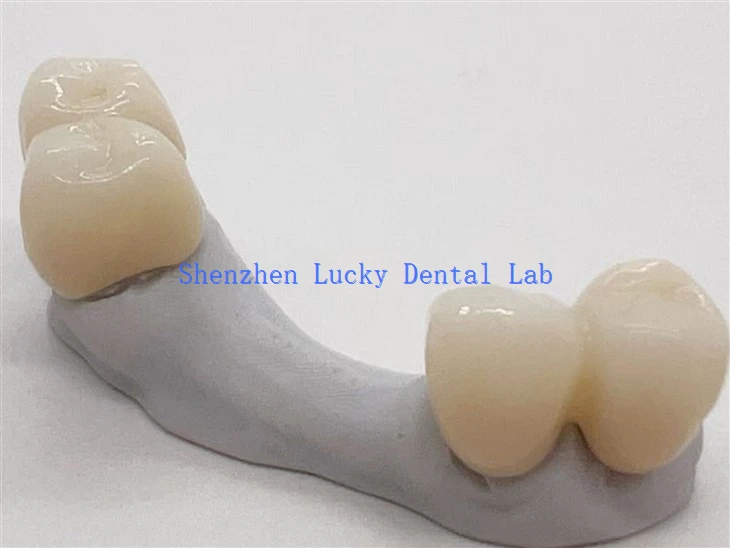
Shenzhen Lucky Dental Laboratory Co., Ltd. is one of the leading manufacturers and suppliers of 3d print aesthetic dental zirconia bridge in China. With abundant experience, we warmly welcome you to buy discount 3d print aesthetic dental zirconia bridge from our factory. We also accept customized orders.
Products Description
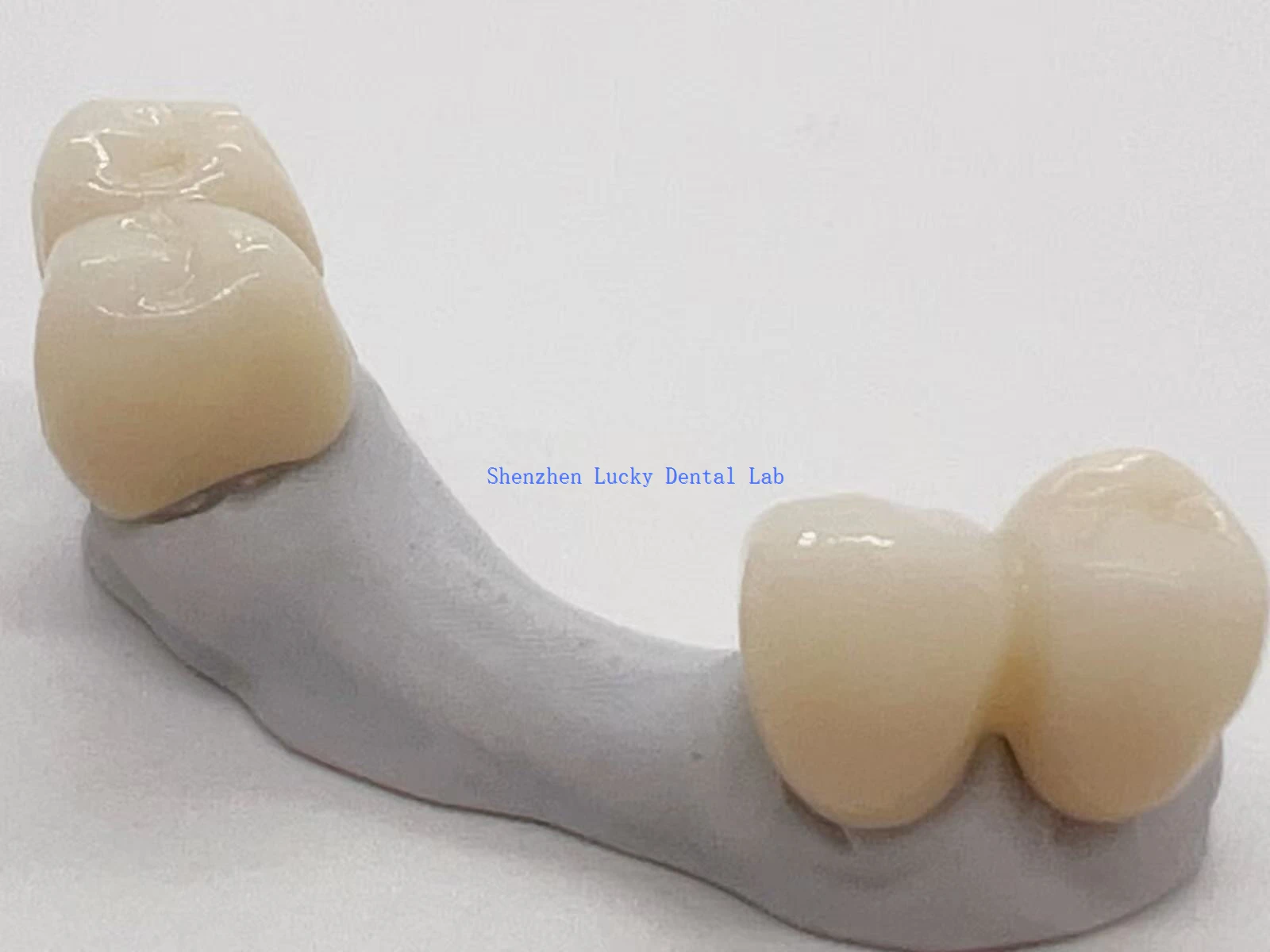
3D Print Aesthetic Dental Zirconia Bridge
A dental zirconia bridge is a premium fixed prosthetic used to replace missing teeth, renowned for its strength, aesthetics, and biocompatibility. Crafted from high-purity zirconium dioxide, it offers exceptional durability, comparable to metal alloys, making it suitable for both anterior and posterior teeth.
Its natural tooth-like translucency and customizable shade match surrounding dentition seamlessly, enhancing smile aesthetics. Unlike metal bridges, it resists corrosion and doesn't cause gum discoloration. The bridge consists of artificial teeth (pontics) anchored to adjacent natural teeth or implants via crowns.
Lightweight and gentle on opposing teeth, it provides long-term functionality with proper care. Widely recommended by dentists, zirconia bridges balance strength and beauty, making them a popular choice for restoring dental function and appearance.
Product Details
|
Manufacturer |
Lucky Dental Lab |
|
Quality |
Great |
|
Customer service |
Professional |
|
Shipping Carrier |
UPS, FedEx, DHL, etc. |
|
Guarantee |
5 years |
|
turnaround time |
3 days in lab |
Picture
FAQ
Does getting a zirconia bridge require grinding down adjacent natural teeth significantly?
Getting a zirconia bridge typically requires some enamel reduction on adjacent natural teeth (abutment teeth), but not "significantly" more than other fixed bridges like porcelain-fused-to-metal (PFM) options.
Dentists need to reshape the abutment teeth to create space for the crowns that anchor the bridge, ensuring a secure fit and proper alignment with opposing teeth. The amount of grinding depends on the tooth's natural structure and the bridge design, but it's generally minimal-focused on removing enough enamel to accommodate the crown's thickness (usually 0.5–2 mm per surface) while preserving as much healthy tooth structure as possible.
This process is standard for fixed bridges, as the abutment teeth must be prepared to support the prosthetic effectively. Modern techniques and digital planning help minimize unnecessary reduction.