


Shenzhen Lucky Dental Laboratory Co., Ltd. is one of the leading manufacturers and suppliers of 3d print dental cocr metal framework with acrylic denture try in in China. With abundant experience, we warmly welcome you to buy discount 3d print dental cocr metal framework with acrylic denture try in from our factory. We also accept customized orders.
Products Description
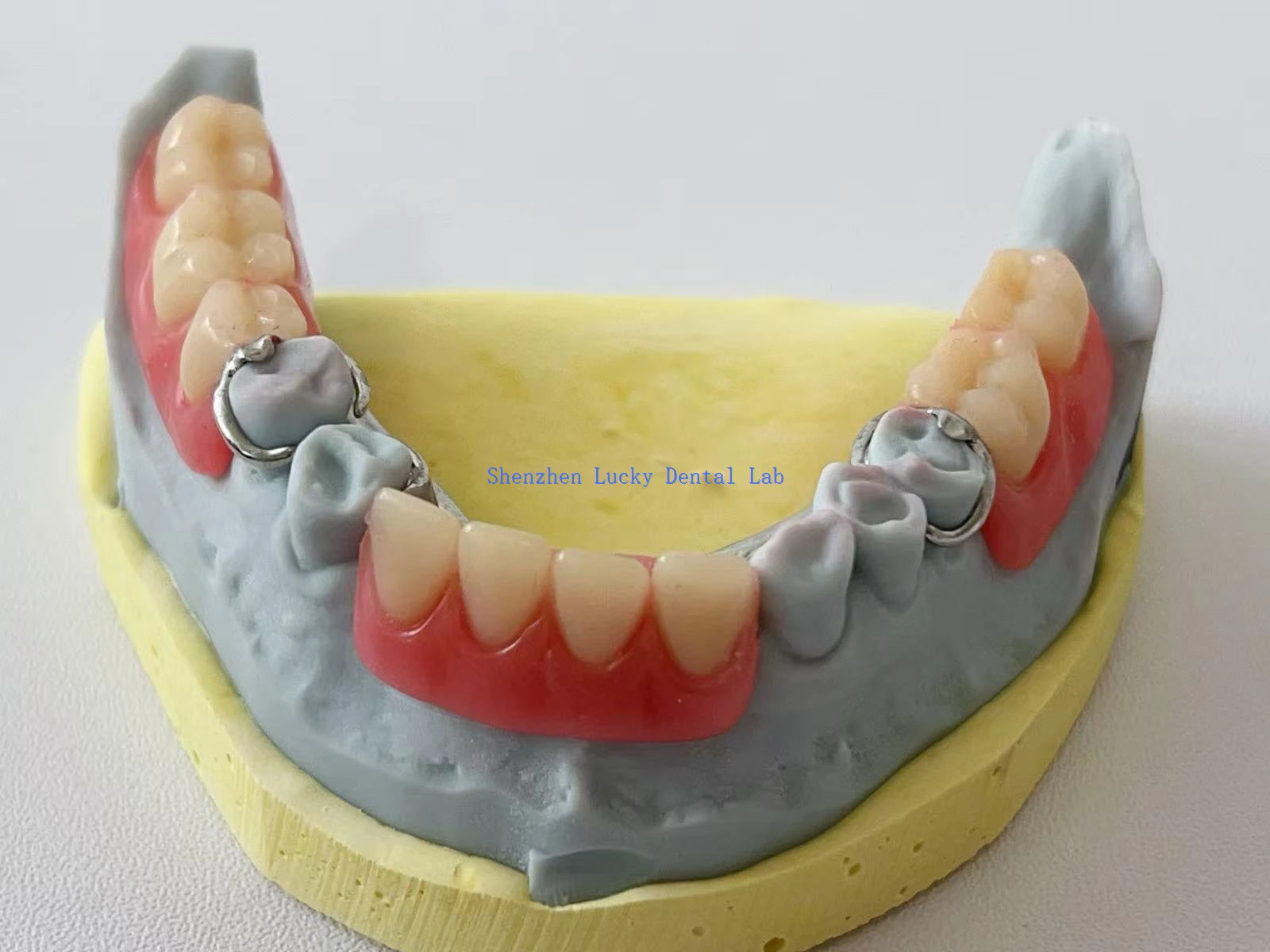
3D Print Dental CoCr Metal Framework with Acrylic Denture Try in
Dental CoCr Metal Framework with Acrylic Denture Try-in is a critical fitting stage in partial/full denture fabrication, verifying the CoCr framework and acrylic denture's precision before final delivery.
During try-in, clinicians assess the framework's tissue fit-checking for gaps between the CoCr base and oral mucosa to ensure even pressure distribution. Acrylic denture elements (teeth, base) are evaluated for occlusion alignment, gingival contour mimicry, and clasp retention strength. Patient feedback on comfort (no mucosal irritation) and aesthetics (tooth shade/position) guides adjustments, refining issues like loose fit or uneven bite. This step ensures the final denture balances CoCr's stability and acrylic's lifelike look, optimizing function and wearability.
Product Details
|
Manufacturer |
Lucky Dental Lab |
|
Quality |
Great |
|
Customer service |
Professional |
|
Shipping Carrier |
UPS, FedEx, DHL, etc. |
|
Guarantee |
5 years |
|
turnaround time |
3 days in lab |
Picture
FAQ
How to perform Dental CoCr Metal Framework with Acrylic Denture Try-in?
To perform Dental CoCr Metal Framework with Acrylic Denture Try-in, follow these steps:
Preparation: Inspect the CoCr framework (no deformation) and acrylic components (secure teeth, smooth base). Check the patient's oral condition for inflammation or obstacles.
Seating Check: Gently place the framework in the mouth; ensure unobstructed seating. Assess fit between the CoCr base and mucosa-no gaps to guarantee even pressure.
Clasp & Retention: Verify clasps engage abutment undercuts properly, with moderate retention (not too loose/tight) to avoid damaging abutment teeth.
Acrylic Evaluation: Check occlusion (no premature contacts via articulating paper), tooth shade/position for aesthetics, and acrylic base edges for comfort (no mucosal irritation).
Patient Feedback: Ask about comfort, stability, and appearance; adjust issues like loose fit or sharp edges.
Documentation & Adjustment: Record findings, refine as needed, then approve for final fabrication if satisfactory.