


Shenzhen Lucky Dental Laboratory Co., Ltd. is one of the leading manufacturers and suppliers of acrylic partial with wire clasp in China. With abundant experience, we warmly welcome you to buy discount acrylic partial with wire clasp from our factory. We also accept customized orders.
Products Description
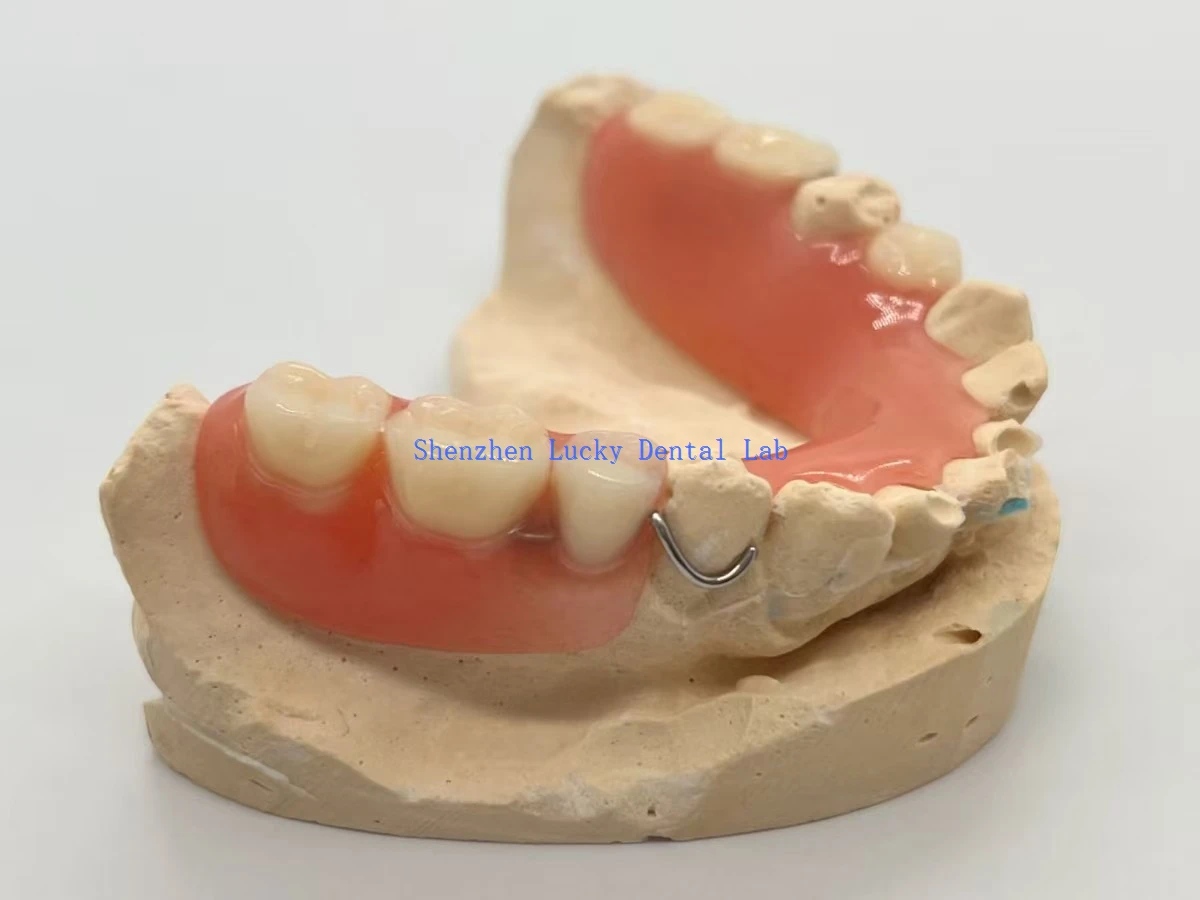
Acrylic Partial with Wire Clasp
The Acrylic Partial with Wire Clasp is a removable dental prosthetic for partial tooth loss. It has a pink acrylic base that mimics natural gum tissue, plus acrylic teeth matched to the user's natural dentition in shade and shape. A thin, flexible metal wire clasp anchors it to remaining natural teeth, keeping it stable during daily use. Lightweight and customizable, it fits the oral cavity snugly, blending with surrounding tissues for a natural look.
Product Details
|
Manufacturer |
Lucky Dental Lab |
|
Quality |
Great |
|
Customer service |
Professional |
|
Shipping Carrier |
UPS, FedEx, DHL, etc. |
|
Guarantee |
5 years |
|
turnaround time |
3 days in lab |
Picture
FAQ
How often does the Acrylic Partial with Wire Clasp need adjustments or replacements (e.g., due to wear or jawbone changes)?
The adjustment and replacement frequency of an Acrylic Partial with Wire Clasp depends on factors like wear, jawbone changes, and maintenance, but general guidelines apply:
Adjustments
Initial period: Most users need a 1–2 follow-up adjustments within the first 3–6 months. This addresses minor fit issues (e.g., looseness or gum irritation) as the mouth adapts to the prosthetic.
Routine adjustments: After the break-in phase, annual checkups with the dentist are recommended. Adjustments may be needed every 1–2 years if signs of wear (e.g., stretched clasps, uneven acrylic) or slight jawbone shifts cause discomfort or instability.
Replacements
Typically, the prosthetic lasts 5–7 years with proper care. However, replacements may be required earlier if:
The acrylic base or teeth show severe wear (e.g., chipping, thinning) that can't be repaired.
Significant jawbone resorption (common with long-term tooth loss) makes the fit too loose, even after adjustments.
The metal clasp breaks or loses elasticity, compromising stability.
Regular dental exams help track its condition, allowing the dentist to recommend replacement before functionality or comfort declines.