


Shenzhen Lucky Dental Laboratory Co., Ltd. is one of the leading manufacturers and suppliers of customized dental partial flexible denture try in manufacturers in China. With abundant experience, we warmly welcome you to buy discount customized dental partial flexible denture try in manufacturers from our factory. We also accept customized orders.
Products Description
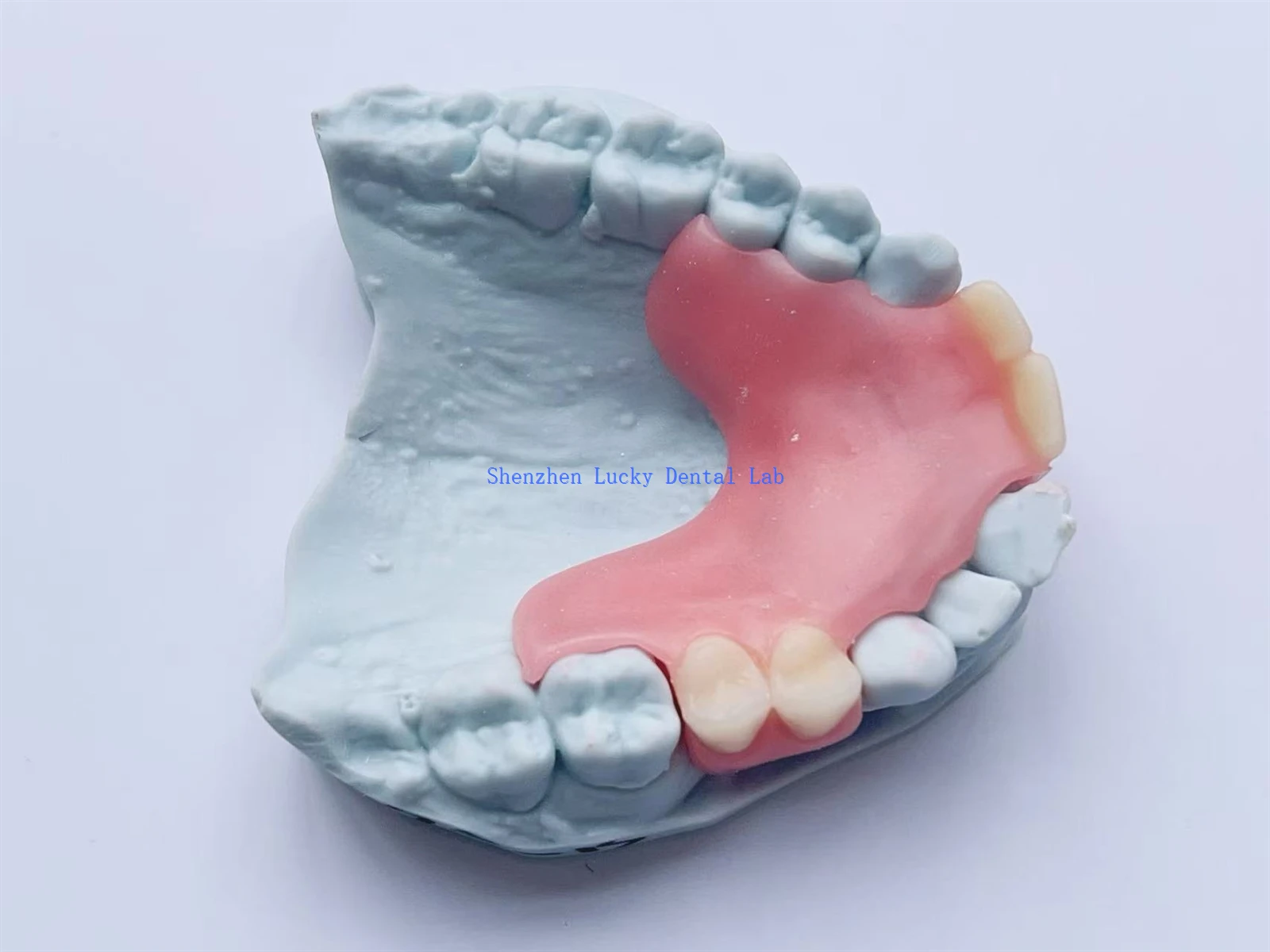
Customized Dental Partial Flexible Denture Try in Manufacturers
This professional-grade flexible partial denture features a biocompatible, thermoplastic resin framework designed for precise tissue adaptation and minimal mucosal irritation. The try-in stage allows clinicians to evaluate fit, occlusion, and esthetics prior to final fabrication. Its flexible nature enables seamless insertion/removal while distributing occlusal forces evenly, reducing stress on adjacent teeth. The framework integrates precision clasps or retention mechanisms for secure placement, with custom-shaded acrylic teeth matched to the patient's natural dentition. This try-in phase ensures optimal functionality, comfort, and aesthetic harmony, minimizing post-delivery adjustments and enhancing patient satisfaction in restorative dental care.
Product Details
|
Manufacturer |
Lucky Dental Lab |
|
Quality |
Great |
|
Customer service |
Professional |
|
Shipping Carrier |
UPS, FedEx, DHL, etc. |
|
Guarantee |
5 years |
|
turnaround time |
3 days in lab |
Picture
FAQ
Can partial flexible denture be adjusted for fit during try-in without compromising elasticity?
Yes, flexible partial dentures can be adjusted for fit during try-in without losing elasticity, but follow these key rules:
Material Limits: Polyamide resins (common in flexible dentures) have a yield strength of 65+ MPa. Adjustments should stay below 60% of this strength and keep the framework at least 1.5 mm thick to prevent brittleness.
Adjustment Methods:
Use a hot air pen (350–400°C) for 5–8 seconds on specific areas to avoid overheating the resin (which loses elasticity above 140°C).
Trim edges with fine carbide burs at low speed to prevent frictional heat damage.
Safe Zones: Focus adjustments on flange margins or tissue relief areas. Avoid modifying clasp tips or major connectors, which are critical for retention and structure.
Testing Elasticity: After adjusting, check if the clasp recovers within 10 seconds after a 2 N force-permanent deformation over 5% means over-adjustment.
Avoid Mistakes: Never add acrylic to flexible frames (causes cracking) or use ultrasonic cleaning on adjusted parts. If major issues exist, remolding the framework is better than repairs.
This approach ensures fit improvements while keeping the denture flexible and durable.