

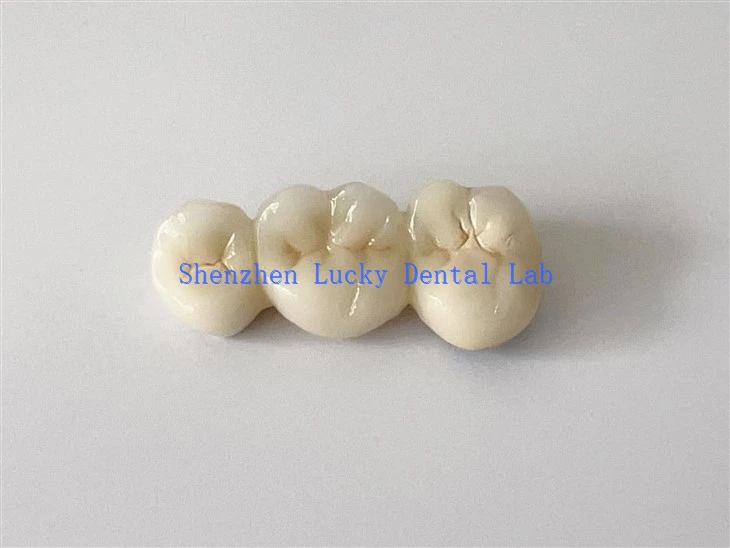
Shenzhen Lucky Dental Laboratory Co., Ltd. is one of the leading manufacturers and suppliers of china customized pfm cocr bridge dental lab in China. With abundant experience, we warmly welcome you to buy discount china customized pfm cocr bridge dental lab from our factory. We also accept customized orders.
Products Description
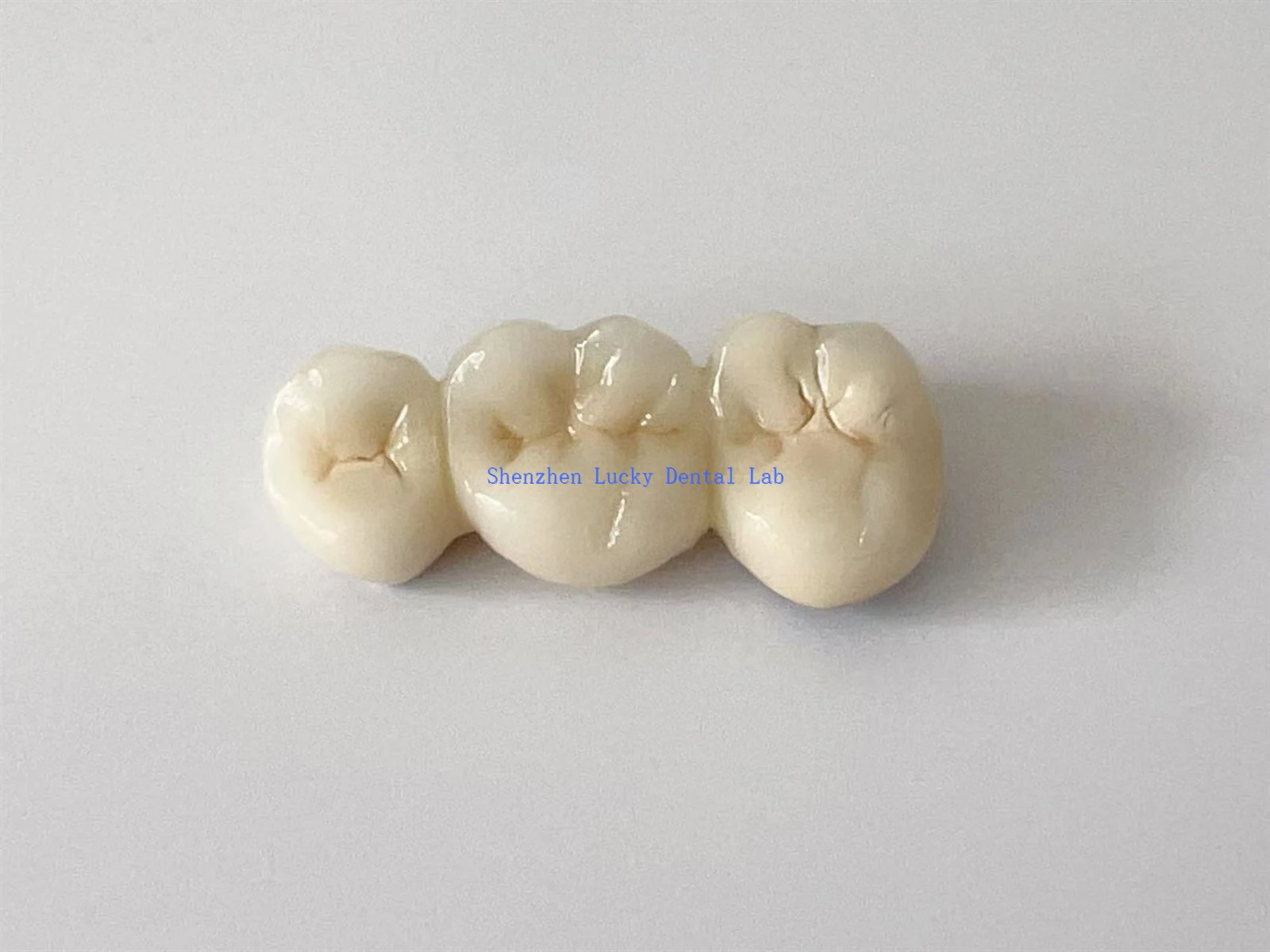
China Customized PFM CoCr Bridge Dental Lab
PFM CoCr bridges are prosthetic restorations combining a cobalt-chromium (CoCr) alloy framework with a porcelain veneer. The CoCr base offers exceptional strength (up to 700 MPa) and corrosion resistance, making it ideal for supporting multi-tooth bridges under heavy biting forces. The porcelain layer mimics natural tooth color and translucency, ensuring aesthetic harmony for anterior or posterior teeth.
Crafted via precision casting, these bridges require moderate tooth reduction and provide a secure fit. While the metal framework may cause a subtle gray margin at the gum line, their biocompatibility suits most patients. Resistant to wear and staining, PFM CoCr bridges balance durability with cosmetic appeal, offering a cost-effective solution for replacing missing teeth in both functional and aesthetic restoration.
Product Details
|
Manufacturer |
Lucky Dental Lab |
|
Quality |
Great |
|
Customer service |
Professional |
|
Shipping Carrier |
UPS, FedEx, DHL, etc. |
|
Guarantee |
5 years |
|
turnaround time |
3 days in lab |
Picture
FAQ
Can PFM CoCr bridges cause gum inflammation?
PFM CoCr bridges may cause gum inflammation, but this is usually due to factors like a poor fit, rough margins, or bad oral hygiene-not the materials. Here's what matters:
Margin Issues: If the metal-porcelain edge is too thick or placed incorrectly (like too deep in gums), it can irritate tissue. Rough margins also trap plaque, leading to inflammation.
Fit and Cleaning: A badly fitted bridge leaves gaps for plaque, while complex designs make cleaning hard. Both cause gingivitis.
Rare Allergies: Some may react to cobalt/chromium in the alloy, causing red, swollen gums.
To prevent problems:
Ensure the bridge is precisely made with smooth margins.
Place margins at or above the gum line for easy cleaning.
Keep up with brushing, flossing, and dental check-ups.
In short, the bridge itself isn't the problem-poor design or care is. Fixing these issues reduces gum inflammation risks.