

Identifying semi-precious stones is a skill that combines knowledge, experience, and a keen eye for detail. As a supplier of semi-precious stones, I've had the privilege of working with a wide variety of these beautiful gems, and I'm excited to share some insights on how to identify them.
Understanding Semi-Precious Stones
Before diving into the identification process, it's important to understand what semi-precious stones are. Unlike precious stones such as diamonds, rubies, sapphires, and emeralds, semi-precious stones are more abundant and generally less expensive. However, this doesn't mean they're any less beautiful or valuable. Semi-precious stones come in a vast array of colors, shapes, and sizes, each with its own unique properties and characteristics.
Visual Inspection
One of the first steps in identifying semi-precious stones is through visual inspection. Start by examining the stone's color. Semi-precious stones come in a wide range of colors, from vibrant blues and greens to soft pinks and yellows. Note any variations in color, as well as the intensity and saturation. Some stones may have distinct color patterns or inclusions that can help with identification.
Next, look at the stone's clarity. Clarity refers to the presence of inclusions or flaws within the stone. While some semi-precious stones, such as amethyst and citrine, are typically clear, others, like turquoise and lapis lazuli, may have visible inclusions that are characteristic of the stone. Inclusions can range from tiny dots and lines to larger fractures or cloudiness.
The shape and cut of the stone can also provide clues to its identity. Semi-precious stones are often cut into various shapes, such as round, oval, pear, and emerald cuts. The cut can affect the stone's brilliance and sparkle, as well as its overall appearance. Additionally, some stones may have unique cuts or faceting patterns that are specific to the type of stone.
Hardness Testing
Another important factor in identifying semi-precious stones is their hardness. Hardness refers to a stone's resistance to scratching and abrasion. The Mohs scale of hardness is commonly used to measure the hardness of minerals, with diamonds being the hardest at a rating of 10 and talc being the softest at a rating of 1.
To test the hardness of a semi-precious stone, you can use a set of hardness testing tools or simply try scratching the stone with a known material of a certain hardness. For example, if a stone can be scratched by a copper penny (which has a hardness of about 3.5 on the Mohs scale), it is likely to be a softer stone, such as calcite or gypsum. On the other hand, if a stone can scratch glass (which has a hardness of about 5.5 on the Mohs scale), it is likely to be a harder stone, such as quartz or topaz.
Specific Gravity Testing
Specific gravity is another property that can be used to identify semi-precious stones. Specific gravity refers to the ratio of the weight of a stone to the weight of an equal volume of water. Different semi-precious stones have different specific gravity values, which can help distinguish between similar-looking stones.
To test the specific gravity of a semi-precious stone, you can use a specific gravity kit or a simple balance and a container of water. First, weigh the stone in air, then weigh it again while it is submerged in water. The difference in weight between the two measurements can be used to calculate the specific gravity of the stone.

Refractive Index Testing
Refractive index is a measure of how much light is bent or refracted when it passes through a stone. Different semi-precious stones have different refractive index values, which can be used to identify them. Refractive index testing is typically done using a refractometer, which is a specialized instrument that measures the angle of refraction of light passing through a stone.
Chemical Testing
In some cases, chemical testing may be necessary to identify a semi-precious stone. Chemical testing involves using various chemicals to react with the stone and produce a characteristic color or reaction. However, chemical testing should only be done by a trained professional, as some chemicals can be dangerous and may damage the stone.
Using Reference Materials
In addition to the above methods, it can be helpful to use reference materials such as gemology books, online databases, and identification guides to assist with the identification process. These resources can provide detailed information about the physical and chemical properties of different semi-precious stones, as well as images and descriptions to help you compare and identify the stone you're working with.
Conclusion
Identifying semi-precious stones is a complex and rewarding process that requires a combination of knowledge, experience, and the right tools. By using visual inspection, hardness testing, specific gravity testing, refractive index testing, and chemical testing, as well as reference materials, you can become more confident in your ability to identify different types of semi-precious stones.
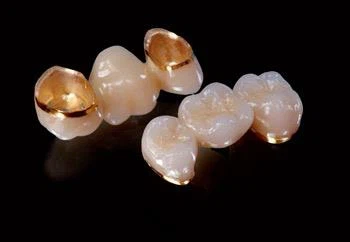
As a supplier of semi-precious stones, I offer a wide range of high-quality stones, including Semi-precious metal palladium-silver crown, Strong Semi Precious Crown, and Dental Semi Precious Palladium Gold Crown. If you're interested in purchasing semi-precious stones for your jewelry making, dental, or other projects, I encourage you to contact me to discuss your needs and explore our product offerings.
References
- "Gem Identification: An Introduction" by Richard W. Hughes
- "The Gemstone Bible" by Robert Weldon
- "Gems and Jewelry: Identification, Evaluation, and Buying Guide" by Walter Schumann